10 Best Paper Cup Holder Suppliers Worldwide?

Time:2026-10-08 Author:Oliver
0%

Choosing among the 10 Best Paper Cup Holder Suppliers Worldwide requires more than comparing catalog prices. A reliable Paper Cup Holder must protect cups, support fast service, and remain comfortable during delivery. A weak design can collapse beside a hot latte. Small failures become expensive when thousands of units move through cafés, offices, and events.

Industry data shows why this category deserves closer attention. Grand View Research reported continued growth in the global paper cups market, driven by takeaway consumption and foodservice expansion. Smithers’ paper packaging forecasts also identify sustainability, fiber innovation, and lightweighting as major development pressures through the decade. These trends affect holder suppliers directly. Buyers now examine board strength, recycled fiber content, printing quality, packaging efficiency, and production consistency. Euromonitor International has likewise highlighted the continuing importance of convenience formats in food and beverage services.

This guide evaluates leading suppliers through practical criteria, including manufacturing capacity, customization, certifications, minimum order quantities, export experience, and response reliability. Supplier claims still require checking. A recycled-content statement may not explain the percentage, certification, or coating system. Pricing can change with pulp costs, freight rates, and order volume. That is inconvenient, but realistic. The strongest supplier is not always the cheapest one. It may be the company that sends accurate samples, documents material specifications, and maintains stable quality after repeat orders. Regional strengths also matter, especially when delivery schedules and customs procedures affect landed cost. The following selection offers a useful starting point, not a permanent verdict. Market conditions change, and every buyer should validate current evidence before signing a contract.
10 Best Paper Cup Holder Suppliers Worldwide?

What Makes a Reliable Paper Cup Holder Supplier

A reliable paper cup holder supplier does more than quote a low unit price. The real test begins with a sample. Check the holder beside a filled cup, not an empty one. The rim should stay firm, and the base should resist bending after several minutes. Ask for paper weight, flute or fold design, adhesive type, and production tolerances. Clear answers show process control. Vague promises do not.

Samples matter. Professional suppliers provide traceable material records and consistent inspection reports. They should explain how they test load strength, moisture resistance, print quality, and dimensional accuracy. Photos help, but retained samples provide stronger evidence. Request samples from different production batches. Small variations can reveal weak supervision. Reliable communication also matters. A capable team confirms artwork details, packing counts, carton strength, and shipping dates in writing. One missed detail can disrupt an entire service schedule.

Experience appears in practical questions. Does the supplier recommend a stronger holder for tall cups? Can it adjust tooling without creating excessive waste? Does it disclose minimum order quantities and realistic lead times? Responsible suppliers avoid exaggerated environmental claims and share verifiable certifications when relevant. Still, no checklist is perfect. A supplier may pass an audit and later struggle during peak demand. Keep records. Review complaints and reassess quality after production increases. Trust should be earned repeatedly, not printed on a brochure.

Top Paper Cup Holder Suppliers Across Global Markets

Choosing among the 10 best paper cup holder suppliers worldwide requires more than comparing prices. Global markets need suppliers that understand different cup sizes, delivery conditions, and local packaging expectations. A reliable supplier should provide clear material specifications, production samples, and consistent quality records. Recycled paperboard, water-based inks, and strong locking structures can improve both performance and environmental credibility.

In practical sourcing work, I would test each holder with hot and cold cups before approving a large order. Place six filled cups inside, lift the carrier, and check for bending, loose joints, or leaking condensation. Small details matter. Suppliers serving North America may focus on larger takeaway formats, while European and Asian markets often request compact designs and lower material use. However, regional assumptions can be imperfect. Customer habits vary even within one country.

Tips: Request samples from several suppliers. Confirm paper thickness, load capacity, printing limits, minimum order quantity, and lead time in writing. Ask how quality is checked during production. A supplier with documented inspections is usually easier to manage across borders. Also review carton dimensions, because oversized cartons can increase freight costs and storage waste. Do not judge sustainability from recycled content alone. Check certifications, coatings, ink types, and disposal guidance. An attractive sample may still fail under real café conditions. Temperature, moisture, and rushed handling can expose weaknesses that photographs never show.

Product Types, Materials, and Customization Options

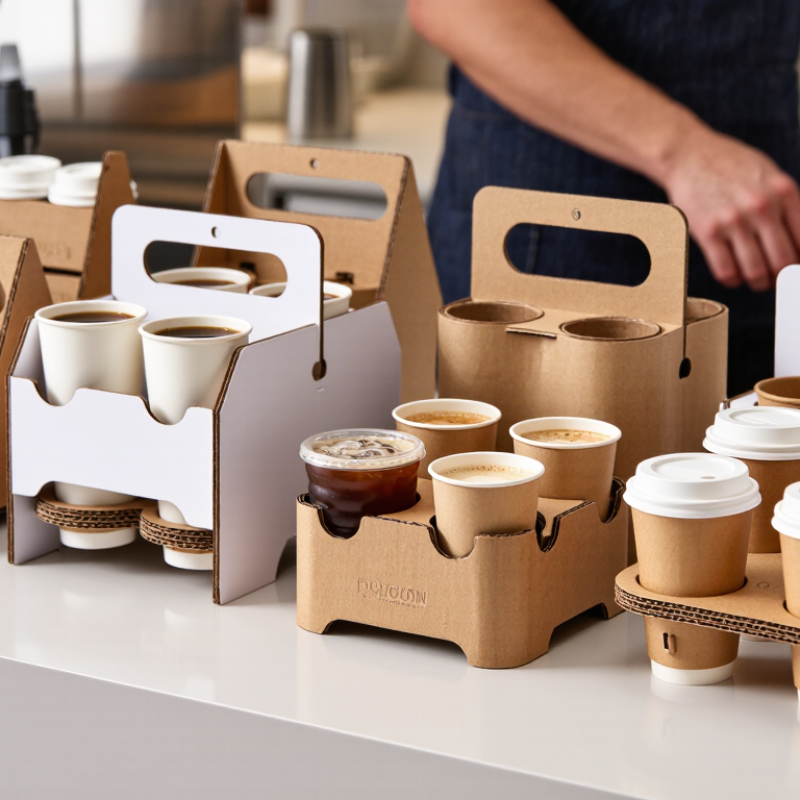
When comparing paper cup holder suppliers worldwide, product range should be examined before pricing. A reliable supplier should explain how each design performs in real use. I have handled samples where weak folds collapsed after a few minutes. Small differences matter. Single-cup holders suit cafés and takeaway counters, while two-cup carriers improve stability during short deliveries. Four-cup trays support larger orders but require stronger locking points. Some suppliers also offer stackable designs, which save storage space. No holder is perfect.

Material selection affects strength, appearance, and disposal performance. Paperboard is lightweight and works well for standard drinks. Corrugated paper provides better cushioning for hot or filled cups. Recycled fiber can reduce virgin material use, although its surface may look less uniform. Molded pulp feels sturdy and gives products a natural texture. Ask for material specifications. Moisture resistance is another practical concern. A holder exposed to condensation may soften before reaching the customer. I would not trust vague claims without sample testing or documented production controls.

Customization goes beyond printing a logo. Suppliers may adjust cup openings, handle shapes, folding structures, and tray depth. A practical design should fit the cup firmly without damaging the rim. Printing can use simple one-color graphics or detailed multi-color artwork. Die-cut handles improve carrying comfort, but they can weaken narrow sections. Request prototypes before approving large production. One overlooked issue is stacking pressure. If the holders deform during transport, attractive artwork cannot repair the problem. Clear specifications, inspection records, and responsive communication make supplier evaluation more dependable.

10 Best Paper Cup Holder Suppliers Worldwide? - Product Types, Materials, and Customization Options

Comparative overview of supplier capabilities, commonly available materials, product formats, and customization services

Rank Supplier Profile Primary Market Region Main Product Types Common Materials Customization Options Typical Certifications or Compliance Typical MOQ Typical Lead Time
1 High-Volume Foodservice Manufacturer East and Southeast Asia Single-cup holders, double-cup carriers, four-cup carriers, catering trays Recycled kraft paperboard, virgin kraft board, coated paperboard Flexographic or offset printing, die-cut handles, custom compartments, flat-pack design Food-contact paper requirements, FSC-certified material availability, ISO-based quality systems 10,000–50,000 units 20–40 days
2 Sustainable Fiber Packaging Specialist Western Europe Recyclable cup carriers, molded-fiber holders, takeaway drink trays Recycled paper pulp, molded fiber, uncoated kraft board Embossing, natural-color printing, water-based inks, custom nesting structures Recyclability documentation, food-contact declarations, FSC or PEFC options 5,000–25,000 units 30–60 days
3 Retail and Café Packaging Supplier North America Two-cup carriers, four-cup carriers, beverage-and-snack trays SBS paperboard, kraft board, recycled post-consumer fiber board Brand-neutral stock sizes, custom artwork, grease-resistant coatings, perforated sections FDA food-contact requirements where applicable, recyclable packaging specifications 1,000–10,000 units 10–30 days
4 Automated Die-Cutting and Folding Factory China and Vietnam Flat-pack cup holders, locking carriers, stackable beverage trays Kraft board, coated paperboard, corrugated micro-flute board Custom tooling, locking tabs, ventilation openings, multiple cup diameters Factory quality inspection, food-contact material testing, export packaging standards 10,000–100,000 units 25–45 days
5 Molded-Pulp Drink Carrier Producer Northern Europe Two-cup molded carriers, four-cup molded carriers, protective inserts Recycled cellulose fiber, bagasse fiber blends, water-resistant molded pulp Custom molds, embossed symbols, compartment sizing, natural fiber finishes Compostability or recyclability testing, food-contact declarations, forestry certifications 20,000–100,000 units 35–70 days
6 Short-Run Custom Packaging Converter United Kingdom and Ireland Event carriers, promotional cup holders, limited-edition takeaway trays Kraft card, recycled board, white folding boxboard Digital printing, low-volume personalization, rapid prototyping, special cutouts Food-safe ink options, recyclable substrate declarations, responsible sourcing documentation 500–5,000 units 7–21 days
7 Large-Format Catering Packaging Supplier Australia and New Zealand Four-cup carriers, six-cup carriers, catering beverage trays Heavyweight kraft board, corrugated paperboard, molded fiber Reinforced bases, larger cup wells, carry handles, moisture-resistant treatments Local food-packaging regulations, recyclable material options, quality-control testing 5,000–30,000 units 20–45 days
8 Premium Printed Paper Packaging Specialist South Korea and Japan Premium cup carriers, gift beverage packaging, retail-ready holders High-density paperboard, kraft board, recycled coated board High-resolution printing, matte or gloss finishes, foil accents, precision die-cutting Food-contact compliance, controlled color management, recycled-content documentation 3,000–20,000 units 25–50 days
9 Regional Foodservice Distributor with Private-Label Support Middle East and South Asia Standard two-cup carriers, four-cup carriers, disposable drink trays Kraft paperboard, recycled paperboard, corrugated board Stock designs, one- or two-color printing, carton labeling, mixed-size orders Food-contact documentation, import labeling requirements, supplier quality inspections 1,000–10,000 units 10–35 days
10 Compostable Fiber Packaging Manufacturer Latin America Bagasse-based carriers, molded-fiber trays, takeaway beverage holders Sugarcane bagasse, recycled cellulose, unbleached molded fiber Custom molds, embossed logos, natural finishes, moisture-resistant fiber treatments Compostability testing where applicable, food-contact declarations, sustainable-fiber documentation 10,000–50,000 units 30–60 days

Note: MOQ and lead-time figures are typical industry ranges and may vary according to material availability, tooling requirements, print coverage, order quantity, inspection requirements, and shipping destination.

Comparing Supplier Quality, Pricing, Capacity, and Delivery

Choosing the 10 best paper cup holder suppliers worldwide requires more than comparing catalog prices. Quality should be measured through fiber strength, load testing, print consistency, and moisture resistance. Suppliers with ISO 9001 systems usually offer better process control, but certification alone proves little. Request recent test records and production samples. Small flaws often appear around folded corners.

Pricing depends on paper grade, recycled content, tooling, order volume, and shipping terms. Smithers’ packaging studies continue to identify recycled fiber demand and material efficiency as major cost drivers. A low quotation may exclude mold fees, export cartons, or port charges. Compare landed cost, not unit price. Ask for pricing at three volumes. Useful detail matters.

Capacity also needs evidence. Review monthly output, machine availability, backup equipment, and peak-season allocation. Delivery claims should be checked against the World Bank Logistics Performance Index 2023 and UNCTAD’s Review of Maritime Transport 2023, both highlighting the effect of customs and shipping reliability. Request a production schedule with inspection dates and a contingency plan. Two to four weeks of buffer stock can protect campaigns, although it ties up cash. No shortlist is perfect. I would still rank a slightly costlier supplier higher when communication is documented, defects are traceable, and delivery promises survive a difficult month.

How to Choose the Best Supplier for Your Business

10 Best Paper Cup Holder Suppliers Worldwide?

How to Choose the Best Supplier for Your Business

Choosing among global paper cup holder suppliers requires more than comparing online prices. A reliable supplier should provide consistent dimensions, clean folding lines, and stable material quality. Request samples before placing a large order. Test them with hot and cold cups, especially during transport and stacking. A holder that looks strong may soften after moisture exposure.

Check the supplier’s production capacity, minimum order quantity, lead time, and packaging method. Ask for food-contact documentation and quality-control records from recognized testing bodies. Clear records are more useful than vague claims. Calculate the landed cost, including freight, customs fees, replacement rates, and storage. A cheaper unit price can become expensive when cartons arrive damaged. Communication matters too. Slow replies often create bigger problems during seasonal demand.

Tips: Use a written checklist. Compare at least three suppliers. Ask for a pilot order. Measure cup fit, grip comfort, printing accuracy, and carton strength. Keep one sample from every approved batch for later comparison. Sustainable fiber options may support your business image, but confirm their actual material content and disposal guidance. Recycled content alone does not prove responsible sourcing. Be careful with attractive promises. Some specifications may change after negotiation, and buyers sometimes overlook small defects until thousands of units are delivered. A supplier’s willingness to discuss failures can reveal more than a polished catalog.

FAQS

What should I compare when choosing a paper cup holder supplier?

Compare material specifications, cup-size compatibility, samples, inspection records, minimum order quantities, and lead times. Price alone is not enough.

How can I test a holder before placing a large order?

Place six filled cups inside and lift the carrier carefully. Check for bending, loose joints, leaking condensation, and unstable openings. Test both hot and cold cups.

Which holder design suits different order sizes?

Single-cup holders suit counters and small takeaways. Two-cup carriers improve stability during short deliveries. Four-cup trays need stronger locking points.

Which materials are commonly used for paper cup holders?

Paperboard is lightweight and suitable for standard drinks. Corrugated paper adds cushioning. Recycled fiber reduces virgin material use but may look less uniform.

How important is moisture resistance?

It is very important. Condensation can soften a holder before delivery. Do not rely on general claims; test filled cups under realistic conditions.

What customization options should suppliers provide?

Suppliers may adjust cup openings, handles, folding structures, and tray depth. Printing can range from simple graphics to detailed artwork. Prototypes are useful.

Does recycled content prove that a holder is sustainable?

No. Review coatings, ink types, certifications, and disposal guidance. Recycled content alone gives an incomplete picture.

What quality problems can appear during transport?

Stacking pressure may deform holders inside cartons. Oversized cartons can increase freight costs and storage waste. Attractive printing cannot fix structural damage.

How do regional market needs differ?

Some markets prefer larger takeaway formats. Others request compact designs and lower material use. These patterns are not universal, so local customer habits need checking.

What supplier information should be confirmed in writing?

Confirm paper thickness, load capacity, printing limits, minimum order quantity, lead time, and inspection procedures. Vague details create avoidable sourcing risks.

Conclusion

Choosing the right Paper Cup Holder supplier is essential for businesses that need reliable packaging, consistent product quality, and efficient delivery. A dependable supplier should offer durable construction, food-safe materials, stable production capacity, clear communication, and strong quality-control procedures. Suppliers serving global markets may provide various options, including single-cup sleeves, multi-cup carriers, molded fiber holders, corrugated designs, and recyclable or compostable materials. Custom printing, dimensions, colors, structural designs, and packaging methods can also help businesses create a more practical and recognizable solution.

When comparing suppliers, buyers should evaluate product performance, material quality, pricing transparency, minimum order quantities, customization capabilities, production lead times, and shipping arrangements. The lowest price may not always represent the best value if it results in weak protection or inconsistent delivery. Businesses should request samples, confirm specifications, review production capabilities, and discuss sustainability goals before placing an order. By balancing quality, cost, capacity, customization, and service reliability, companies can select a Paper Cup Holder supplier that supports long-term operational needs across different markets.

Oliver

Oliver

Oliver is a seasoned marketing professional with a wealth of expertise in driving brand awareness and engagement. With a deep understanding of our company's product offerings, he consistently delivers high-quality content that enriches our professional blog. His insights not only shed light on......