China Top Corrugated Paper Cup Holder Suppliers are attracting global buyers with practical, lightweight, and customizable packaging solutions. These holders support cafés, takeaway counters, delivery platforms, and event venues. They help customers carry hot or cold beverages more securely. The small details matter. A stable base, clean folding lines, and accurate cup openings can prevent spills during busy commutes.
Dr. Diana Twede, a respected packaging scholar, offers a useful principle: “Packaging should protect products while using resources responsibly.” This idea applies directly to every Corrugated Paper Cup Holder. Responsible suppliers should explain their paper grades, flute structures, printing methods, and moisture resistance. They should also provide samples before large production runs. A sample can reveal weak edges, rough die-cutting, or an uncomfortable grip. These issues are easy to miss in a catalog.
Reliable Chinese manufacturers usually combine factory experience with documented quality controls. Buyers should examine compression performance, stacking behavior, color consistency, and adhesive strength. Food-contact suitability also requires careful documentation. Sustainability claims deserve equal attention. Recycled content, recyclable coatings, and efficient material use should be supported by clear evidence. Not every attractive green statement is complete. That deserves reflection.
Supplier communication can influence the final result. Clear artwork files, cup dimensions, order quantities, and delivery schedules reduce avoidable mistakes. Some suppliers excel at competitive pricing. Others provide stronger customization or faster sampling. The best choice depends on the application, not only the quotation. In practice, a dependable Corrugated Paper Cup Holder supplier delivers protection, visual appeal, and consistent performance across repeated orders. Perfect results are unlikely at the first attempt. Careful testing makes improvement possible.
What Are Corrugated Paper Cup Holders?
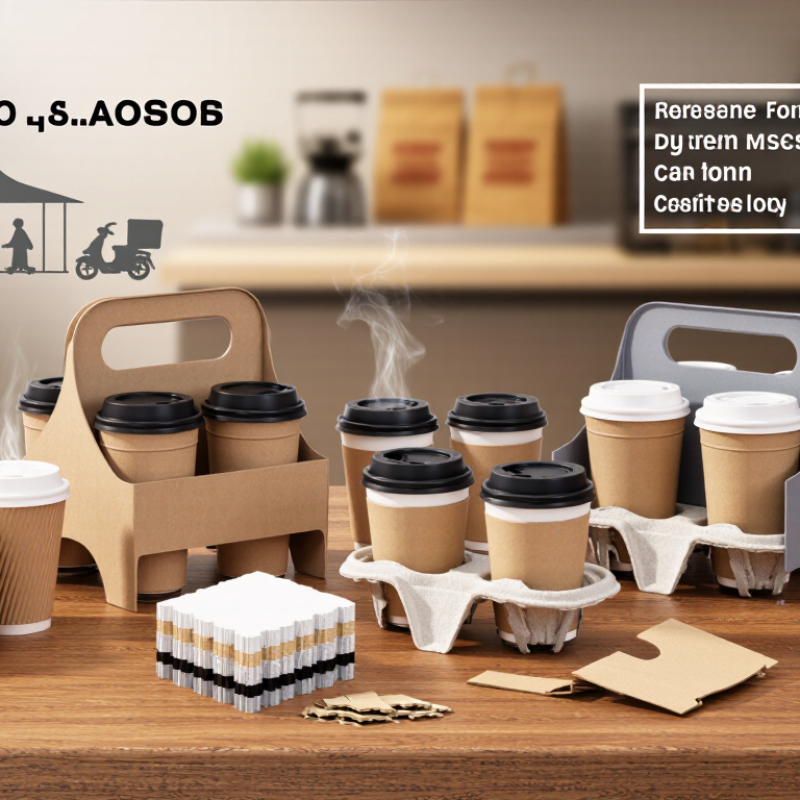
Corrugated paper cup holders are molded or die-cut carriers made from fluted paperboard. They keep cups upright during takeaway delivery, office service, and crowded café counters. The inner flutes create a light structure with useful compression strength. Flat sheets fold into pockets that grip cup walls without covering the drinking opening.
Most holders carry two or four cups. Their openings must match real cup diameters, not only printed measurements. A loose pocket allows movement, while a tight pocket can damage thin paper cups. In practical packaging trials, a filled carrier should remain stable when lifted from one side. Small details matter. Fold lines, locking tabs, and base support often decide whether the holder works.
China’s corrugated paper cup holder suppliers commonly offer kraft, recycled, and white paperboard options. Buyers should check paper thickness, flute direction, moisture resistance, and load performance before ordering large quantities. A sample test with hot and cold cups reveals weaknesses faster than a catalog image. Some designs perform well on a dry counter but soften after condensation appears. That flaw is easy to miss. Food-contact suitability, printing quality, odor, and recycling instructions also deserve written confirmation. Suppliers with clear specifications, traceable materials, and repeatable samples are generally easier to evaluate.
Key Features and Types of Cup Holders
China’s corrugated paper cup holder suppliers offer several practical formats for cafés, caterers, and takeaway counters. The right design depends on cup size, drink weight, and carrying distance. A single-cup sleeve suits short walks and compact orders. Two-cup carriers work well for coffee and tea. Four-cup trays support larger orders but need stronger locking points.
Material quality matters. Fluted corrugated board adds stiffness without excessive weight. A broad base improves balance on uneven tables. Die-cut openings should hold cups firmly without crushing paper rims. Some holders include finger holes, while others use a flat panel for easier stacking. Test both with hot and cold drinks.
Real production checks should include moisture resistance, edge strength, and folding accuracy. A holder that performs well in dry sampling may soften near condensation. That detail is easy to miss. Suppliers should provide clear board specifications, load-testing records, and food-contact material information when applicable. Printing can improve visibility, but heavy ink coverage may affect folding or recycling performance.
Consider storage too. Nested holders save space, while assembled trays speed up busy service. A supplier with flexible tooling can adjust hole diameter, handle height, and locking tabs for different cups. However, more customization can increase setup time and material waste. A practical trial run often reveals problems that drawings cannot show. The best design is not always the largest or strongest; it should feel stable, simple, and comfortable in one hand.
How Corrugated Cup Holders Are Manufactured
Corrugated Cup Holder Manufacturing: From Paper Roll to Stable Grip
Manufacturing begins with selecting food-contact-safe paperboard and tested fluting paper. Suppliers check fiber strength, moisture, thickness, and surface cleanliness before production. These details affect folding accuracy and resistance to condensation. A poorly balanced sheet may buckle around a cold drink.
Large rolls pass through a corrugating machine. Heat and controlled pressure shape the inner paper into flutes. Adhesive bonds the fluted layer to flat liners, creating a lightweight board with useful compression strength. Operators monitor temperature, glue coverage, and machine speed during this stage. Small errors become visible later.
The finished board enters a die-cutting press. Sharp tools form the holder’s outline, finger openings, locking tabs, and fold lines. Samples are measured with calipers and folded by hand. Quality teams also test stacking strength, edge tearing, and fit with different cup sizes. Some factories use digital cutting for short runs and tooling for larger orders.
Printing, if required, happens before final forming. Water-based inks can provide clear graphics while maintaining a clean surface. After cutting, workers remove waste and inspect each bundle under consistent lighting. The process is efficient, but not flawless. Humidity changes can still distort fold lines during storage. Better warehouses use controlled conditions, though this step is sometimes underestimated. Packaging should keep holders flat, dry, and free from crushing pressure during shipment.
How Corrugated Paper Cup Holders Are Manufactured
Flute selection affects the rigidity, folding performance, and material usage of corrugated cup holders. E-flute is commonly chosen for compact, printable packaging, while B- and C-flute provide progressively greater cushioning and thickness. After the board is produced, it is typically printed or coated, die-cut, creased, folded, and glued into the final holder shape. The values shown are typical industry ranges and may vary by paper grade and manufacturing mill.
How to Evaluate China-Based Cup Holder Suppliers
China Top Corrugated Paper Cup Holder Suppliers
How to Evaluate China-Based Cup Holder Suppliers
Evaluating China-based corrugated paper cup holder suppliers requires more than comparing unit prices. Request factory photos, production details, and a recent sample from the same material planned for mass production. Check the paper grade, flute structure, coating, dimensions, and load performance. A holder should support filled cups without bending at the base. Test it with hot and cold beverages, because moisture can weaken ordinary paper quickly.
Ask how the supplier controls incoming paper, printing accuracy, die-cutting, folding, and packing. Reliable factories should provide inspection records and explain acceptable defect limits. Request material documentation for recycled content or food-contact suitability when relevant. Claims need evidence. A certificate image alone proves little. Verify its scope, issuing body, and validity.
Communication is another practical test. Send a drawing with tolerances and observe whether the supplier identifies unclear points. Strong technical teams ask about cup diameter, stacking, delivery conditions, and carton strength. Visit the factory if possible, or arrange a live video inspection. See the cutting area, storage conditions, and finished-goods handling.
Look closely.
A low quote may exclude tooling, inner packing, testing, or freight preparation. Confirm these costs in writing. Lead times should include sampling, approval, production, and inspection. No checklist is perfect. A polished sample can still hide weak batch control, so approve a pre-production sample and inspect random cartons before shipment.
Applications, Customization, and Quality Standards
China’s corrugated paper cup holder suppliers serve cafés, takeaway counters, offices, and event venues. Their products usually secure two to four cups during short-distance delivery. A well-designed holder reduces tipping when cups contain hot coffee or chilled drinks. It also protects hands from direct heat.
Customization begins with cup diameter, depth, and carrying conditions. Suppliers can adjust slot sizes, board thickness, handle shape, and folding structure. Recycled kraft paper offers a natural appearance, while coated surfaces improve resistance to condensation.
Printed patterns should remain clear after stacking and transport. However, excessive ink coverage may affect recyclability and raise production costs. That trade-off deserves review.
Reliable suppliers should provide material specifications, production samples, and traceable inspection records. Quality checks may include paper strength, moisture resistance, dimensional accuracy, and load testing. Food-contact safety also requires suitable raw materials and controlled printing processes. Standards differ by destination market, so buyers should request current compliance documents and independent test reports. In practice, a sample can look excellent but fail after several hours in a humid delivery bag. We have seen this overlooked. A small pilot order can reveal weak folds, loose slots, or unstable handles before full production. Supplier communication matters too. Measurements should be confirmed in writing, especially when cups come from different manufacturers.
Conclusion
A Corrugated Paper Cup Holder is a lightweight, recyclable packaging solution designed to stabilize and protect takeaway cups during carrying, delivery, and display. It is typically made from fluted paperboard, with different structures available for single or multiple cups. Key features may include heat resistance, secure cup openings, stackable designs, and convenient handling. During manufacturing, paperboard is selected, corrugated, printed when required, die-cut, folded, and assembled according to the intended application.
When evaluating China-based cup holder suppliers, buyers should consider material consistency, production capacity, structural design ability, customization options, and communication efficiency. Suppliers should also be able to support different sizes, colors, printing requirements, and packing methods while maintaining reliable quality control. Applications range from cafés and restaurants to catering, events, and beverage delivery. Clear specifications, sample testing, and inspection of strength, fit, moisture resistance, and food-contact suitability can help ensure that the final product meets practical needs and applicable quality standards.
 AOTONG
