Choosing Cake Trays is a practical decision, not a styling exercise. A tray must support the cake from the bakery counter to the customer’s car. It should hold its shape, suit the cake’s weight, and present cleanly under bright display lights. A poor fit can mean sliding layers, damaged frosting, or wasted packaging.
The wider packaging industry makes material choice worth careful attention. The U.S. Environmental Protection Agency reported that containers and packaging generated 82.2 million tons of municipal solid waste in 2018, or 28.1% of the total. That figure covers many packaging types, not cake trays alone, but it highlights the value of weighing durability, material use, and disposal options together. Packaging educator Walter Soroka is a useful industry reference when considering function and protection. For buyers, one practical test is: “Will this tray protect the cake through every handoff?” Treat that as a selection question, not a verbatim Soroka quotation.
This guide compares tray materials, sizes, shapes, and presentation features. It also considers stacking, storage space, and ordering consistency—details that matter during a busy weekend rush. A glossy finish may catch a customer’s eye. Still, a tray that flexes when lifted is a real problem. There is no single best option for every business. The right choice depends on your cakes, service style, budget, and handling conditions. Measure actual products before placing a large order. Small checks help.
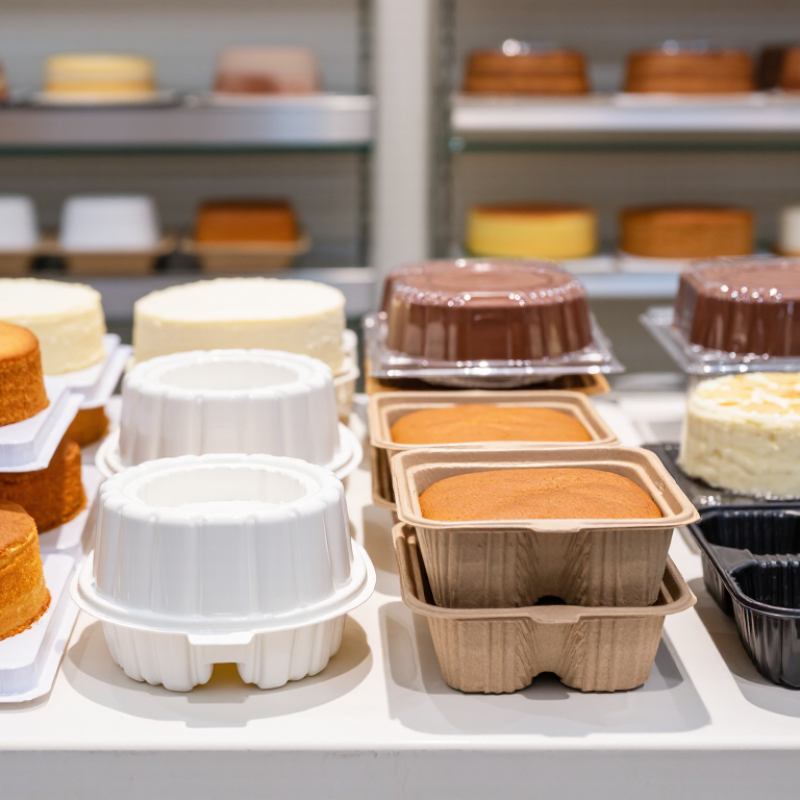
Start with the cake. Measure its base, height, and any frosting or decorations that could catch on a lid. A tray should support the cake without squeezing its edges, while leaving enough room for steady handling. Measure before ordering.
Think about how cakes move through your business. A tray for a refrigerated display may need different dimensions and stacking strength from one used for customer pickup. Check the weight of your largest cake, then test how a loaded tray feels when lifted from both sides. I’ve found that small handholds can matter more than they look on a product sheet. They are easy to overlook.
Match the material and design to your daily routine. Consider whether trays will be reused, stored flat, or discarded after service, and check how much shelf space each option takes. If staff assemble boxes during busy periods, simple folds and secure closures can reduce handling time. Check the stated temperature limits against your storage and serving conditions. Keep a few samples in the kitchen for a real fit test. One detail may still surprise you: a tray that fits the cake can be awkward in the delivery bag. Compare the complete packed order, not just the tray.
For a cake business, choose trays by balancing protection, presentation, and disposal options. Clear PET makes decorations visible and resists splashes, but it is not designed for oven use. Paperboard feels sturdy and suits printed designs; grease-resistant coatings can complicate recycling. Reusable polypropylene handles repeated service and warmth better, though it may look less transparent. Check the tray’s food-contact specifications and test it with your actual cake, frosting, and delivery route. A tray that flexes under a tall cake is a costly surprise.
Size is more than diameter. Measure the cake base, then allow room for frosting, decorations, and fingers lifting the lid. Test the complete package in a delivery bag; corners and tall domes can catch or crush icing. Fit matters. For mixed menus, a small range of tray sizes may reduce empty space without forcing every cake into one format.
The U.S. EPA’s 2018 Advancing Sustainable Materials Management report estimated 82.2 million tons of containers and packaging waste, with 53.9% recycled. That figure covers all packaging, not cake trays, but it underlines why disposal claims should be checked locally.
Look for clear material labeling and ask suppliers what their customers can actually recycle. I still find appearance can outweigh practicality in purchasing decisions. It shouldn’t. Test stacking, lid security, and moisture resistance before ordering in bulk.
Choosing cake trays in 2026 means checking more than price and appearance. Food safety starts with material suitability. Confirm that supplier documentation specifies direct food contact and the intended temperature range. A tray for chilled cheesecake may not suit warm pastries. Check edges for burrs, coatings for chips, and the base for unusual odors before a production run. Small checks catch problems early.
Durability affects waste and service. Stack sample trays as staff would, then test them with a realistic cake weight. Watch for flexing, corner cracks, and lids that shift during a short delivery route. A tray that looks sturdy when empty can bow under a tall sponge. Try samples in cold storage and at room temperature, too. This is not a perfect test, but it may reveal weak points a desk review misses. Thick packaging can still perform poorly when wet.
Sustainability needs evidence, not just green wording. Compare recycled content, recyclability in your local collection system, and material used per tray. Ask whether coatings or mixed materials complicate sorting. Reusable options can reduce single-use waste, but only when washing, storage, and returns are workable. Do the arithmetic using actual weekly volumes. A lighter tray is not automatically better if breakage means more replacements. Record failures and reconsider your choice after a month.
Evaluate food safety, durability, and sustainability
Sustainability benchmark: EU 2030 packaging recycling targets, by weight, range from 30% for wood to 85% for paper and cardboard. These are packaging-wide targets—not a guarantee that a specific cake tray will be recycled. Before buying, also confirm food-contact compliance for your market and check that the tray withstands your product, handling, and storage conditions.
Choosing cake trays in 2026 means comparing more than the quoted price. Calculate landed cost per usable tray, including tooling, minimum order quantities, freight, storage, and damaged stock. A low unit price can lose its appeal when trays arrive late or stack poorly in your display case. Ask suppliers for food-contact documentation, lead times, and sample runs. Test samples with your actual cake size, frosting, and delivery route; a tray that flexes under a 9-inch cake is a costly mistake.
Customization can improve shelf appeal, but printing, unusual dimensions, and custom molds may raise setup costs and lock you into larger orders. Ask for pricing at several order volumes, and confirm who owns the tooling. The U.S. EPA’s Advancing Sustainable Materials Management: 2018 Fact Sheet reports that containers and packaging made up 28.1% of U.S. municipal solid waste. That figure covers many packaging types, not cake trays alone, but it’s a useful reminder to check material use and local disposal options before choosing a design.
Tips: Request plain and customized samples, then compare fit, stacking, and grease resistance. Keep one trade-off visible: a simpler tray may cost less, but may not protect delicate icing. Ask suppliers to quote repeat orders separately from the first run.
| Tray Type | Common Material and Size | Typical Unit Cost | Typical Order Quantity | Indicative Lead Time | Customization Options | Best Suited For | Key Buying Consideration |
|---|---|---|---|---|---|---|---|
| Clear hinged cake container | PET plastic; commonly sized for 8–10 in (20–25 cm) cakes | $0.25–$0.75 | About 500–5,000 pieces | 1–3 weeks for standard stock; longer for custom printing | Label, sleeve, insert, or limited-area printing | Whole cakes sold for takeaway and display | Check lid clearance, closure strength, and condensation performance for refrigerated cakes. |
| Cardboard cake board with box | Food-contact board with corrugated or folding carton; commonly 8–12 in (20–30 cm) | $0.40–$1.80 | About 500–3,000 sets | 2–5 weeks, depending on printing and construction | Printed exterior, board color, window, and size | Celebration cakes, bakery counter sales, and delivery | Confirm board thickness and load capacity for tall or heavy cakes; keep the board dry. |
| Aluminum foil cake pan with lid | Aluminum foil; common round or rectangular baking formats | $0.15–$0.80 | About 1,000–10,000 pieces | 1–4 weeks for standard formats | Pan dimensions, rim style, and compatible lid | Single-serve cakes, loaf cakes, and bake-and-sell products | Verify oven-use instructions and lid fit; do not assume every lid is suitable for baking. |
| Rigid reusable cake tray | Food-grade polypropylene or similar rigid plastic; size varies by cake format | $1.50–$6.00 | About 100–1,000 pieces | 2–6 weeks for standard products | Color, compartments, logo mark, and tray dimensions | In-house production, catering, and repeated transport | Check cleaning instructions, stacking stability, and local food-contact requirements. |
| Molded-fiber tray or insert | Molded paper fiber; custom shape or standard insert format | $0.20–$1.20 | About 2,000–20,000 pieces | 4–10 weeks for new tooling or custom shapes | Shape, cavity layout, color, and printed sleeve | Portion cakes, cupcakes, and protective inserts | Request samples to test fit and moisture resistance; confirm disposal claims for the target market. |
| Custom-printed paperboard tray | Coated or uncoated paperboard; dimensions specified by the buyer | $0.30–$1.50 | About 1,000–10,000 pieces | 3–8 weeks, including artwork approval | Full-color print, finish, window, and die-cut shape | Retail-ready packaging and branded bakery ranges | Ask whether the quoted price includes tooling, proofs, and food-contact barriers. |
| Supplier assessment: Compare at least three written quotations on the same specifications. Confirm unit price breaks, minimum order quantity, sample availability, tooling or setup fees, packaging and freight terms, lead time, defect policy, and food-contact documentation applicable to your market. The cost ranges above are indicative benchmarks, not guaranteed supplier quotes. | |||||||
How to Choose the Best Cake Trays for Your Business in 2026?
Select and Test Trays for Daily Operations
A tray that fits one cake may slow an entire shift. Test samples with your usual batter, oven settings, and daily production volume. Check whether trays slide easily into racks and leave enough space for airflow. Measure finished cakes for browning, height, and edge consistency. A small difference can matter when orders need matching layers. Do not rely on a quick, empty-tray inspection.
Tips: Run several loaded batches, not just one. Note the tray temperature, bake time, release quality, and cleanup effort. Ask staff to handle trays with oven gloves during a busy changeover. If washing is part of your routine, check for trapped crumbs and water in corners. Keep the notes simple. A paper log works.
Test trays after repeated use, too. Look for warping, rough edges, coating damage, or changes in release. Compare results across different shifts, since loading habits can vary. It is easy to blame the recipe when a tray is the real variable. Still, one imperfect trial proves little; repeat the test before changing your purchase plan. Choose a size and material your team can handle safely and consistently, then confirm they suit your oven and care instructions.
Measure the cake’s base and height, including frosting or decorations. Leave room around the edges so the lid does not catch. Measure before ordering.
Load a tray with your largest cake and lift it from both sides. Check whether it fits inside the delivery bag, too. Small handholds can matter more than they seem.
Ask for documentation confirming direct food contact and the intended temperature range. Inspect edges for burrs, coatings for chips, and the base for unusual odors. Keep samples nearby.
Stack loaded samples and check for flexing, cracks, or shifting lids. Test them in cold storage and at room temperature. It is not a perfect test, but it can reveal weak points.
Check whether trays fit your racks, store flat, and fold or close easily. Ask staff to handle loaded trays during a busy changeover. Awkward corners slow people down.
Run several batches using your usual batter and oven settings. Note bake time, browning, release, and cleanup. One trial proves little; repeat it before changing your plan.
Consider washing, storage, returns, material use, and local recycling options. Compare actual weekly volumes and replacement rates. A lighter tray is not automatically the better choice.
Record damage, warping, or release changes across different shifts. Review the notes after a month and reconsider if problems repeat. Recipes can be blamed unfairly.
Choosing the right Cake Trays starts with understanding your business’s daily needs, including the types of cakes you sell, portion sizes, expected order volume, and how trays will be stored, handled, and presented. Compare materials, dimensions, and designs to find options that suit your products and workflow. Consider how easily trays can be cleaned, how well they hold up to repeated use, and whether their materials align with your business’s sustainability goals.
Before making a decision, compare costs, supplier reliability, delivery timelines, and available customization options. A tray that fits your budget should also meet your quality and operational requirements. Test a small selection during regular service to assess stability, convenience, appearance, and storage efficiency. Feedback from staff can help identify practical issues before you commit to a larger order, ensuring your final choice supports both smooth operations and a consistent customer experience.

AOTONG