
How to Choose the Right Paper Boat Tray for Your Business?

Time:2026-09-18 Author:Henry
0%

Choosing the right Paper Boat Tray can influence food quality, service speed, and customer perception. A tray that looks attractive may still collapse under hot fries, oily snacks, or generous portions. The practical choice begins with understanding your menu, serving temperature, portion weight, and delivery distance. Small details matter.

A reliable evaluation should examine paperboard strength, grease resistance, coating suitability, size, and stacking performance. For example, a 500-gram serving needs more support than a small pastry portion. Test the tray with real food, not empty samples. Hold it for several minutes. Add sauce. Carry it across a busy counter. These simple checks often reveal weaknesses that product photographs hide. I have seen businesses focus on low unit prices, then lose money through leaking oil, damaged presentation, and slower packing. That mistake is easy to repeat.

Supplier experience also deserves attention. Ask for material specifications, food-contact documentation, production consistency, and sample approval before placing a large order. Responsible manufacturers should explain how their trays perform in takeaway, catering, and delivery conditions. Sustainability claims need evidence, not attractive wording. Recyclability can depend on coatings, local facilities, and contamination levels. The answer is not always obvious.

Your brand matters too. A plain white tray may suit a casual food stall, while a printed design can strengthen recognition. Yet excessive ink or poor printing may distract from the meal. Choose function first. Then refine appearance. The best Paper Boat Tray balances protection, presentation, cost, and responsible sourcing. There is no perfect option for every business. Careful testing remains the most trustworthy guide.
How to Choose the Right Paper Boat Tray for Your Business?

What Is a Paper Boat Tray and How Is It Used?

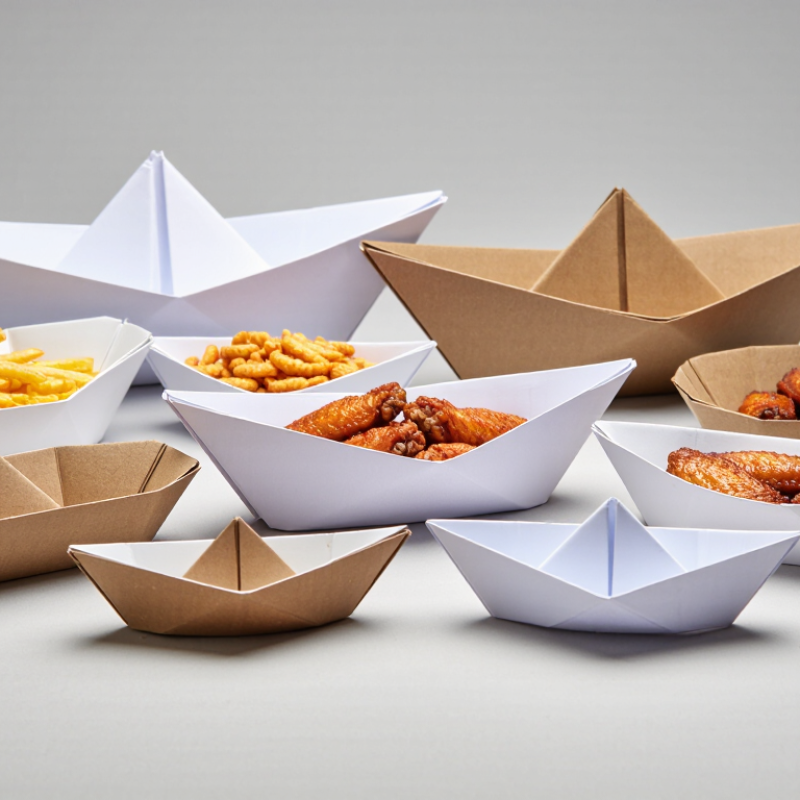
A paper boat tray is a folded food container shaped like a small boat. It usually holds fries, snacks, pastries, or takeaway portions. The raised sides help contain food and reduce spills during serving. Some trays include grease-resistant coatings, while others use untreated paper for dry foods. Understanding this difference matters before choosing one for your business.

In practical testing, the best tray stayed firm when filled with hot fries and carried across a busy counter. Size, paper weight, fold strength, and moisture resistance all affect performance. A tray that looks attractive may still soften after several minutes. That is an easy detail to overlook. Check whether the tray fits your serving portions without leaving excessive empty space. A poor fit can increase waste and make food look smaller.

Tips: Test samples with your actual menu items. Add sauces, steam, and movement during the trial. Measure how long the tray remains stable. Choose food-contact materials supported by clear supplier documentation. Ask about recycling guidance in your market, because coatings can affect disposal. Also inspect the folding edges by hand. They should feel secure, not sharp or loose. When selecting a paper boat tray, practical handling should matter as much as appearance.

Which Materials and Sizes Suit Your Products?

Choosing the right paper boat tray starts with the product, not the tray shape.

For dry snacks, recycled paperboard can provide enough stiffness and a clean, natural appearance. Fried foods need stronger grease resistance, especially around the corners. A water-based coating may help, but it can soften under heavy moisture. Molded fiber offers better structure for saucy meals, although its rougher surface may affect presentation.

Size matters just as much.

Measure the food after cooking, including toppings and sauce. Leave a small clearance, but avoid excessive empty space. A tray that is too large wastes material and increases movement during delivery.

The Food and Agriculture Organization’s 2022 Forest Products Yearbook recorded global paper and paperboard production above 400 million tonnes. This scale supports broad material availability, but it does not guarantee responsible sourcing. Ask suppliers for recycled-content details, fiber certification, and grease-test results.

OECD’s Global Plastics Outlook reports that packaging represented about 40% of global plastic waste in 2019. Paper alternatives can reduce plastic dependence, but coatings still require careful review.

Tips:

Test three sizes with real portions. Check leakage after 30 minutes. Stack filled trays before ordering in bulk. A tray that looks perfect empty may collapse when hot food adds weight.

I have seen teams overlook this small test, then discover warped corners during peak service. Also, confirm whether the tray fits your sealing machine, carrier bag, and storage shelf. Convenience often decides the final size.

How to Compare Tray Strength, Safety, and Sustainability?

Choosing the right paper boat tray starts with the food, serving temperature, and handling conditions. A tray for crispy snacks faces different demands than one holding hot, oily meals. In practice, strength depends on more than paper thickness. Check the rim, base, folding points, and stacking performance. A useful trial places loaded trays in delivery bags for thirty minutes. Watch for bending, leaking, or soft corners. A tray may look rigid and still fail under steam.

Safety requires clear material information and reliable documentation. Ask for food-contact test reports, coating details, and production traceability. Check whether inks, adhesives, and grease barriers are suitable for the intended food. Requirements can differ between markets, so local compliance should be confirmed before purchasing. Do not rely only on a supplier’s attractive product photos. The first sample may pass a desk inspection but perform poorly beside a hot fryer. That mistake is easy to make.

Sustainability needs a wider view than recycled content. Compare fiber sources, coating composition, manufacturing waste, and disposal options in your service area. A recyclable tray is not automatically recyclable everywhere. Lightweight designs can reduce material use, but they may need extra packaging during transport. Request measured data instead of vague environmental claims. Small details matter. Also test the tray with real portions, sauces, and delivery movement. Our early trial underestimated sauce weight, which changed the preferred tray size. That was inconvenient, but useful. A dependable choice balances strength, safety, and credible environmental performance.

How to Match Tray Design with Branding and Customer Needs?

A paper boat tray should reflect your brand before customers taste the food. Start with your service style. A neat, shallow tray suits pastries and quick counter orders. A deeper design works better for loaded fries, sandwiches, or meals with sauces. Test the tray with real portions, not empty samples. Food weight can change its shape.

Your branding should feel visible but not excessive. Choose a tray color that matches your packaging, menu, or dining space. A small printed mark may look more professional than a crowded design. Consider how the tray appears in customer photographs. Clean edges, balanced space, and readable details support brand recognition. I once preferred a highly decorated tray, but it made the food look less appealing. That choice needed more reflection.

Tips: Check grease resistance, stacking strength, and hand comfort. Ask staff to carry filled trays during a busy service. Ask customers whether the size feels generous or wasteful. Measure storage space before ordering. A tray that looks excellent may still slow down your team. Also, avoid choosing only by appearance. Practical details often shape repeat purchases more than decoration. Test several samples, record honest feedback, and adjust the design before committing to a large quantity.

How to Choose the Right Paper Boat Tray for Your Business? – How to Match Tray Design with Branding and Customer Needs?

Customer Need / Use Case Recommended Tray Design Typical Internal Size Suggested Paperboard Typical Capacity Moisture / Grease Protection Branding Opportunity Best Matching Customer Expectation
Small fries, nuggets, or snack portions Open-top boat with a reinforced rim and slightly tapered sides 120–150 × 80–100 × 35–45 mm 250–300 gsm food-grade paperboard Approximately 250–450 ml Grease-resistant treatment recommended; add a moisture barrier for saucy foods Front-facing panel for a logo, short slogan, or QR code Fast service, easy handling, and a clean presentation
Street-food meals and loaded fries Deep boat with a wide opening and stable flat base 160–190 × 100–125 × 45–60 mm 300–350 gsm food-grade paperboard Approximately 500–750 ml High grease resistance; venting is useful for hot fried food Large printable side panels; two-color graphics can improve readability Generous portions, reduced leakage, and convenient takeaway use
Hot dogs, sausages, and handheld foods Long, narrow tray with raised side walls and a front handhold area 180–220 × 70–90 × 40–55 mm 280–350 gsm food-grade paperboard One standard serving or approximately 350–550 ml Grease-resistant coating; absorbent paper liner may be used for heavily sauced items Long side panel suits a horizontal logo or product message Secure one-handed carrying and minimal food movement
Fried chicken, wings, and mixed hot foods Rigid deep tray with locking folds and optional ventilation openings 180–230 × 120–160 × 55–75 mm 350–450 gsm paperboard Approximately 750–1,200 ml Strong grease resistance plus ventilation to reduce condensation Top rim, exterior walls, and base can carry coordinated graphics Leak control, structural strength, and food crispness during transport
Premium dine-in or event presentation Custom-shaped tray with smooth edges, precise folds, and a clean exterior Size should follow the menu item; commonly 150–220 × 100–150 × 40–65 mm 300–400 gsm paperboard with a premium printable surface Approximately 500–1,000 ml Select a barrier compatible with the food and intended serving time Full-surface printing, color matching, inside-lid messaging, and QR integration Premium appearance, consistent brand presentation, and photo-ready packaging
Eco-conscious takeaway service Simple-material tray with minimal ink coverage and an efficient nesting profile Choose the smallest practical size; common formats range from 130–200 × 90–140 × 35–60 mm 250–400 gsm certified or recycled-content paperboard, subject to food-contact requirements Approximately 350–900 ml Use a commercially compostable or recyclable barrier only when local facilities accept it Natural paper appearance, one-color print, sustainability message, and disposal guidance Responsible material choices, practical disposal, and reduced packaging waste

Design and Branding Selection Checklist

Decision Factor What to Check Practical Recommendation
Food portion Measure the food after filling, including sauces and toppings Leave approximately 10–15% free space to reduce spills and preserve presentation
Transport time Consider heat, condensation, grease, and the expected holding period Use stronger board, suitable barriers, and ventilation for longer takeaway journeys
Brand personality Decide whether the visual identity is premium, playful, minimalist, or natural Match the tray shape, paper tone, ink coverage, and typography to the desired positioning
Print visibility Check how much of the tray remains visible when food is inside Place the main logo on the outward-facing panel and keep essential text away from folds
Storage efficiency Review nesting, flat-pack delivery, assembly time, and stockroom space Prefer nestable or flat-packed designs when storage and shipping efficiency are priorities
Food-contact compliance Verify that paperboard, inks, coatings, and adhesives are suitable for the intended food use Request current compliance documentation and test samples before approving production

Note: Dimensions, capacities, and paperboard weights are typical industry planning ranges. Final specifications should be confirmed through food-load, leakage, heat-retention, stacking, and transport tests.

How to Evaluate Suppliers, Costs, and Order Requirements?

How to Choose the Right Paper Boat Tray for Your Business?

Choosing a paper boat tray starts with a clear operating need, not a low quoted price. Consider tray dimensions, paper strength, coating performance, stacking stability, and heat resistance. A sample should hold your actual food portion without bending or leaking. Test it during busy service, not only on a quiet desk.

Supplier evaluation needs practical evidence. Request material specifications, food-contact documentation, production capacity, quality inspection methods, and realistic lead times. Ask how defects are handled. A responsive supplier is useful, but written details are more reliable. I once focused too heavily on unit cost and overlooked shipping, storage, and setup charges. That mistake made the cheaper option more expensive.

Tips: Compare the full landed cost. Include tooling, packaging, freight, taxes, and expected waste. Check the minimum order quantity against your monthly sales. A large order may reduce the price but tie up cash and warehouse space. Confirm carton dimensions before ordering; awkward cartons can increase storage problems. Request a pre-production sample when printing or custom sizing is involved. Small differences matter. Review payment terms and replacement policies carefully. A sensible trial order can reveal weaknesses before a larger commitment. Some evaluations still feel uncertain, so record test results and supplier responses for future comparison.

FAQS

How should tray depth match different foods?

Use shallow trays for pastries and quick counter orders. Choose deeper trays for loaded fries, sandwiches, or sauced meals. Test real portions. Empty samples can mislead.

Why should trays be tested during busy service?

Food weight may bend the tray. Staff may also carry several filled trays quickly. Observe grip, stacking, leaks, and service speed under pressure. Quiet desk tests are insufficient.

How can tray design support visual recognition?

Match the tray color with your packaging, menu, or dining space. Use a small printed mark and balanced empty space. Crowded decoration may make food look less appealing.

What practical features should a paper tray include?

Check grease resistance, stacking strength, heat resistance, and hand comfort. Clean edges help handling. Details matter.

How can customer opinions improve tray selection?

Ask whether the tray feels generous or wasteful. Watch how customers carry and photograph it. Their feedback may reveal problems staff overlook.

What information should be requested from a supplier?

Request material specifications, food-contact documents, production capacity, inspection methods, and realistic lead times. Ask how defects and replacements are handled. Written details are safer than verbal promises.

How should the total tray cost be calculated?

Include tooling, packaging, freight, taxes, storage, setup charges, and expected waste. A low unit price can become expensive after delivery. I once overlooked these costs.

What should businesses check before placing a large order?

Compare the minimum order with monthly sales and available storage. Confirm carton dimensions and payment terms. Request a pre-production sample for printed or custom-sized trays. A trial order may expose weaknesses.

Conclusion

Choosing the right Paper Boat Tray can improve product presentation, protection, and customer satisfaction. These trays are commonly used to hold snacks, takeaway meals, desserts, and other lightweight food items, offering a convenient shape for serving and transport. When selecting one, consider the material, size, depth, and capacity required for your products. Paperboard, recycled fiber, and coated paper may suit different food types, while moisture and grease resistance are important for hot or oily items. The tray should also be strong enough to maintain its shape without becoming unnecessarily heavy or wasteful.

A suitable tray design should reflect your packaging style and meet customer expectations for cleanliness, convenience, and sustainability. Review printing options, color choices, stacking performance, and ease of disposal before making a decision. When comparing suppliers, assess product consistency, customization support, minimum order quantities, lead times, sample availability, and total costs rather than focusing only on the unit price. A reliable supplier should provide clear specifications and help you balance quality, functionality, appearance, and budget.

Henry

Henry

Henry is a dedicated marketing professional with a profound expertise in the company's offerings. With years of experience in the industry, he possesses an impressive understanding of the market dynamics and consumer behaviors that drive success. Henry is committed to sharing his insights through......