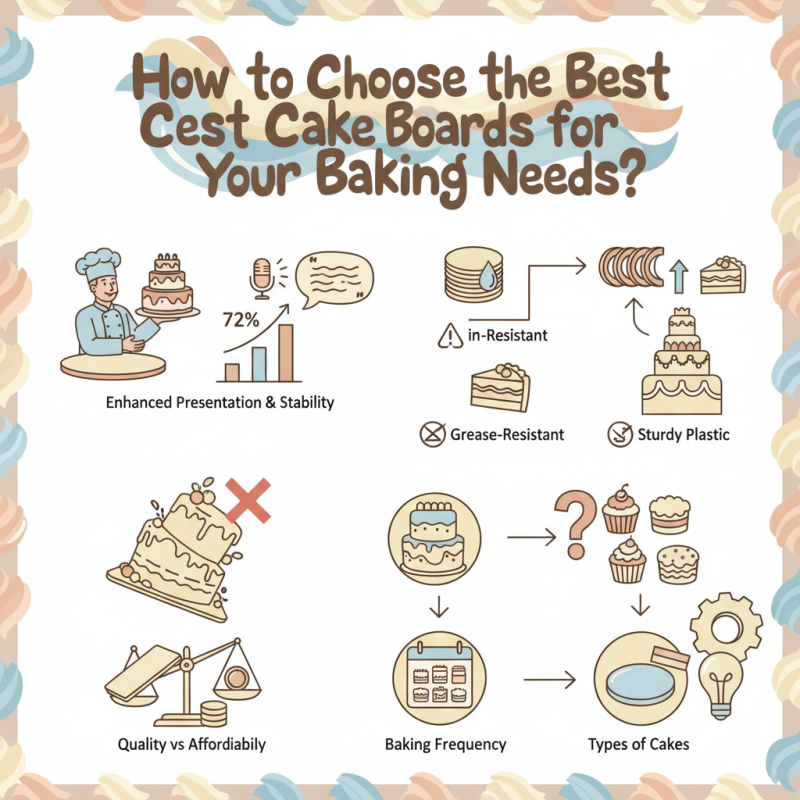
Choosing the right cake boards is crucial for any baker. According to a recent industry report by the National Baker's Association, 72% of bakers believe that quality cake boards enhance the overall presentation and stability of their creations. "Cake boards are the unsung heroes of cake decorating," says renowned pastry chef Linda Sweeney, who emphasizes their role in achieving professional results.
The variety of cake boards available can be overwhelming. Materials range from cardboard to sturdy plastic, each with its advantages. For instance, grease-resistant boards prevent cake damage, while sturdier options support multi-tiered cakes. Knowing the right type of cake board to use can lead to significant improvements in your baking performance.
However, many bakers overlook this aspect. A flimsy board can ruin even the most exquisite cake. It’s essential to balance quality with affordability. Consider your baking frequency and the types of cakes you make. Reflecting on these factors will guide you in selecting the best cake boards to meet your unique needs.
Choosing the right cake board can enhance your baking experience. Cake boards come in various materials and sizes, each serving specific purposes. For beginners, cardboard cake boards are affordable and easy to find. They are perfect for single-layer cakes or home use but may not provide the support needed for heavier creations. Reflect on your baking routine to determine where cardboard may fall short.
For more serious bakers, consider using wooden or plastic boards. Wooden boards offer sturdiness and can support multi-layer cakes well. They’re also reusable, which makes them environmentally friendly. On the flip side, they can be heavier and more challenging to clean. Plastic boards, though lightweight and simple to wipe down, may not have the same visual appeal as wooden options.
There’s also a variety of decorative cake boards. These boards often come in stunning colors or designs and can elevate the presentation of your cakes. However, they may not always align with your functional needs. Take a moment to evaluate what type of board resonates with your style and baking goals. Your choice matters, especially as you perfect your techniques and create memorable baked goods.
When selecting cake boards, several factors play a vital role. The size of your cake is crucial. For a standard 9-inch round cake, a 10-inch board offers the right support. However, larger or tiered cakes may require thicker, sturdier boards. Industry reports indicate that 75% of bakers prefer using thicker boards for multi-tiered cakes to ensure stability.
Material choice is essential too. Cake boards come in cardboard, wood, and plastic. Cardboard boards are cost-effective, perfect for single-layer cakes. Conversely, wooden boards provide durability and elegance for specialty cakes. Many bakers recommend plastic boards for their reusability and ease of cleaning.
Tip: Always consider the weight of your cake. Heavy cakes demand boards with higher load capacity. It's worth investing in quality boards to prevent any mishaps during transport. Reflect on your needs. The right cake board can enhance presentation yet may require more careful handling. Don't overlook this aspect in your baking journey.
Choosing the right cake board goes beyond mere aesthetics. It's essential to consider material durability and weight capacity. A robust cake board should withstand the weight of layered cakes, frosting, and decorations. Some materials, like cardboard, may buckle under heavy cakes, leading to a messy presentation. On the other hand, sturdy options like wood or metal offer lasting support.
When selecting cake boards, test their weight-bearing abilities. A well-made board can hold a 10-inch cake or even larger without sagging. It’s crucial to think about your baking style. If you often bake for large gatherings, invest in thicker, more durable boards. However, lighter cakes may require less robust support. Reflecting on your baking frequency helps avoid wasted resources.
Understand the trade-offs. A heavier board might offer better support, but it can also be a hassle to lift and transport. Consider your comfort and ease of use when choosing. Sometimes, a less durable board might seem appealing for smaller cakes. But in the end, one should reflect on how critical stability is for presentation and enjoyment.
| Material | Durability | Weight Capacity (lbs) | Best Use |
|---|---|---|---|
| Cardboard | Moderate | 5-10 | Light cakes and decorations |
| Foil | Good | 10-15 | Medium-sized cakes |
| Plastic | Very Good | 15-25 | Heavy cakes or multiple tiers |
| Wood | Excellent | 25+ | Large, elaborate cakes |
| Masonite | Very Good | 20-30 | Multi-tier cakes & decorated displays |
When selecting cake boards, cost-effectiveness is a crucial factor. Quality and budget must go hand in hand. A high-quality board supports heavy cakes without bending. However, price should not overwhelm your baking budget. Cheaper options may save money upfront but can lead to frustration. We’ve all experienced cakes that sag or crumble due to inadequate support.
Consider the material of the cake board. A sturdy cardboard option may cost less but lacks durability for heavy designs. On the other hand, wooden boards offer great strength but at a higher cost. Reflect on how often you bake. If you only bake occasionally, a less expensive choice may suffice. But if you’re a frequent baker, investing more for quality can be wise.
Look for bulk purchasing options. Buying in bulk often lowers the cost per board significantly. You can mix sizes to ensure you have what you need when inspiration strikes. Remember to balance your love for quality with your financial limits. It’s not always easy, but finding the right balance can elevate your baking experience.
The trend in cake board designs is evolving. Many bakers are shifting towards eco-friendly materials. Biodegradable cake boards have surged in popularity. They are made from sustainable sources and promote environmental responsibility. Bakers want their creations to be beautiful yet sustainable.
Innovative designs are also emerging. Textured surfaces and intricate patterns are being favored. These features not only enhance aesthetic appeal but also add unique character to the cake. However, one must consider durability. Some decorative boards may lack stability during transport.
Sustainability in baking supplies is crucial. It encourages responsible sourcing and reduces waste. Many bakers are now questioning the sustainability of their materials. This reflection leads to better choices and improved practices. The journey toward eco-friendly baking can be challenging, but it is essential for our planet's health.
: Consider material durability and weight capacity beyond just looks.
A well-made board can hold a 10-inch cake without sagging.
Yes, thicker, more durable boards are better for large gatherings.
Higher quality boards support heavy cakes better, reducing frustration.
Heavier boards provide support but can be harder to lift and move.
Cheaper boards may seem appealing but can lead to sagging cakes.
Frequent bakers might invest in quality, while occasional bakers can choose less expensive options.
Yes, buying in bulk can lower the cost per board significantly.
Think about the balance between quality and your budget constraints.
Wrong choices can lead to presentation issues and a less enjoyable cake experience.
When choosing the best cake boards for your baking needs, it's essential to understand the various types available and their specific uses. Factors such as the size, shape, and type of cake should guide your selection, as different cakes require different support. For instance, heavier cakes necessitate sturdier boards with higher weight capacity to ensure stability during transport and display. Additionally, it's important to balance quality and cost-effectiveness, seeking boards that offer durability without overspending.
Recent trends in cake board designs have also leaned towards sustainability, prompting bakers to consider eco-friendly materials that align with current environmental standards. By staying informed about these trends and insights, bakers can select cake boards that not only meet their functional needs but also reflect their commitment to quality and sustainability in their baking practices.

AOTONG