7 Best Paper Cup Holder Trays for Wholesale Buyers?

Time:2026-10-13 Author:Charlotte
0%

For wholesale buyers, a paper cup carrier is more than a simple packaging accessory. It must protect drinks, support efficient handling, and present a dependable brand image. A well-designed Paper Cup Holder Tray can keep four filled cups steady during delivery, café service, or event distribution.

Small details matter. A reinforced base may prevent sagging when cups contain hot coffee. Raised dividers can reduce contact between lids and limit accidental spills. Buyers should also inspect tray dimensions, material thickness, stacking efficiency, and compatibility with common cup sizes. A low unit price means little if damaged trays create product waste or customer complaints.

No tray wins every test. Some options offer strong rigidity but require more storage space. Others stack neatly yet feel less secure with larger beverages. That trade-off deserves attention. We evaluated seven leading tray styles through practical wholesale criteria, including load stability, production consistency, usability, sustainability claims, and overall value. The discussion also considers how trays perform in busy cafés, takeaway counters, catering operations, and delivery settings.

Reliable sourcing requires more than attractive product photos. Request samples, test filled cups, and confirm dimensions before placing a large order. Supplier communication matters, too. Clear specifications can prevent costly misunderstandings. However, this comparison is not a substitute for your own handling tests. Local customer preferences, cup shapes, and transport conditions may change the final choice. The seven selections below provide a practical starting point for buyers seeking safer, cleaner, and more efficient beverage packaging.
7 Best Paper Cup Holder Trays for Wholesale Buyers?

What Are Paper Cup Holder Trays and Why Do Wholesale Buyers Need Them?

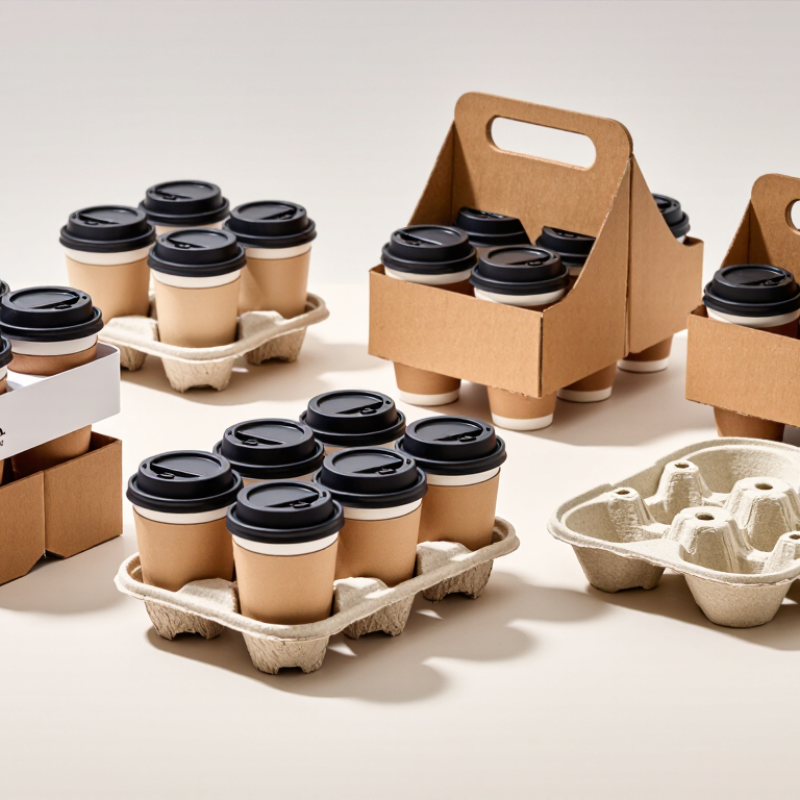
Paper cup holder trays are folded paperboard or molded-fiber carriers that keep two, four, or more filled cups upright. They usually include locking slots, reinforced walls, and nesting features for efficient storage. A good tray feels rigid, but it should not become bulky or difficult to separate.

Wholesale buyers need them because takeaway drinks create handling risks. A tilted tray can spill coffee, stain vehicles, and damage customer confidence. According to Grand View Research, the global paper cups market was valued at about USD 13.5 billion in 2022 and is expected to grow through 2030. That growth increases demand for practical secondary packaging. Smithers also reports continued expansion in paper-based packaging, driven partly by recyclable and fiber-based formats. These figures suggest steady purchasing potential, but they do not guarantee every tray will perform well. I have seen lightweight designs buckle under condensation and four full drinks.

Tips: Test trays with cold and hot cups. Check slot width, stacking height, wet strength, and carrying comfort. Request samples before placing a large order. Compare performance after ten minutes, not only when the tray is dry. Buyers should also confirm fiber composition, printing quality, and relevant food-contact documentation for their market. A low unit price may become expensive after damaged drinks, slow packing, or excessive warehouse space.

Which Types of Paper Cup Holder Trays Are Available?

Wholesale buyers can choose from several paper cup holder tray designs. Molded-fiber trays use pressed recycled pulp and provide a firm, textured grip. They suit cafés, delivery counters, and high-volume events. Corrugated paperboard trays are lighter and usually offer stronger stacking performance. Die-cut flat blanks save warehouse space. Staff fold them into shape when needed.

Common capacities include two-cup, four-cup, and six-cup formats. Four-cup trays often balance carrying comfort and material efficiency. Some designs include raised dividers, thumb openings, or locking tabs. Folding trays can reduce shipping volume, but rushed assembly may weaken the corners. That detail deserves testing. A few suppliers also offer coated fiber trays for better moisture resistance, although coatings can complicate recycling.

Grand View Research estimates the global paper cups market reached about USD 11.5 billion in 2023, with continued growth expected through 2030. This demand supports wider use of compatible cup carriers. Smithers’ sustainable packaging analysis also identifies fiber-based formats as an important development area. Buyers should compare recycled content, compression strength, nesting depth, and food-contact documentation. A tray holding four full cups should remain stable during a short walk, not only on a display table. Test it with hot and cold beverages. Real handling exposes weaknesses that product sheets often miss.

7 Best Paper Cup Holder Trays for Wholesale Buyers

This comparison shows the typical cup capacity of seven commonly available paper cup holder tray formats. Two- and four-cup carriers suit takeaway orders, while six- and eight-cup trays are designed for larger beverage runs and catering use. Actual dimensions, cup compatibility, and load limits should be confirmed with the supplier before wholesale purchasing.

What Features Define the Best Cup Holder Trays for Wholesale Use?

Wholesale buyers should judge cup holder trays by performance, not appearance alone. Capacity matters, but fit matters more. Test trays with the exact cup sizes used by your customers. Loose cups can tip during delivery, while tight openings slow service.

Strong designs support two, four, or more cups without bending. For busy cafés, smooth edges and easy stacking save valuable seconds. Material choice also affects durability. Molded fiber often provides firm support and a practical appearance. Coated paperboard can resist light spills, but excessive moisture may still weaken it.

Moisture resistance matters. Very much. A tray can look sturdy and fail after one soaked drink. Ask suppliers for compression, drop, and load testing data. Check whether results match your transport conditions. Supplier data is useful, but real-world handling reveals more. Do not ignore storage efficiency, either. Nested trays should separate easily and occupy minimal warehouse space. That detail affects labor costs.

Reliable wholesale options usually offer consistent dimensions, stable production quality, and clear packaging information. Inspect samples from different production batches when possible. Small size changes can create major fitting problems. Sustainability claims also require careful review. Recycled content sounds positive, but buyers should verify material percentages and disposal guidance. No tray is perfect; the best choice balances strength, moisture tolerance, storage, price, and customer expectations.

7 Best Paper Cup Holder Trays for Wholesale Buyers? — What Features Define the Best Cup Holder Trays for Wholesale Use?
Rank Cup Holder Tray Type Best Use Case Typical Capacity Common Material Key Features Wholesale Evaluation Points Overall Fit
1 Molded Fiber 4-Cup Tray Cafés, takeaway counters, delivery orders 4 cups
Approx. 8–16 oz each
Recycled molded fiber or bagasse pulp Nestable Rigid base Good grip Recyclable options Efficient carton storage, dependable stacking, suitable for high-volume service, and compatible with common hot and cold paper cups. Excellent
2 Molded Fiber 2-Cup Tray Small orders, office beverage runs, grab-and-go service 2 cups
Approx. 8–20 oz each
Molded paper pulp or recycled fiber Compact Lightweight Easy handling Secure wells Uses less storage space than larger formats and helps reduce unused capacity when customers typically purchase one or two drinks. Excellent
3 Corrugated Paper 4-Cup Carrier Catering, restaurant takeout, event beverage service 4 cups
Approx. 8–24 oz each
Single-wall corrugated paperboard High stiffness Flat-packed Printable Recyclable Flat shipping can lower warehouse volume; verify board strength, slot dimensions, and performance with filled cups before bulk purchasing. Very Good
4 Foldable Paperboard Cup Carrier Quick-service restaurants and mobile beverage stations 2 or 4 cups
Approx. 8–20 oz each
Folding paperboard, commonly recycled-content stock Flat-packed Fast assembly Low weight Custom-printable Useful where freight and storage efficiency matter; inspect folding accuracy, locking tabs, and resistance to tearing around cup openings. Very Good
5 6-Cup Catering Tray Large beverage orders, meetings, parties, and catering 6 cups
Approx. 8–16 oz each
Molded fiber or reinforced paperboard High capacity Central balance Wide base Carry-friendly Reduces the number of carriers needed per order; confirm total loaded weight, handle design, and compatibility with the buyer’s delivery bags. Very Good
6 Recycled Paperboard 4-Cup Tray Sustainability-focused foodservice programs 4 cups
Approx. 8–16 oz each
Recycled paperboard with die-cut cup openings Recycled content Flat storage Printable surface Lightweight Request verified recycled-content information, fiber certification where required, and packaging details that support local recycling rules. Good
7 Universal-Size Paper Cup Tray Distributors serving multiple cup sizes and outlets 2 or 4 cups
Approx. 8–24 oz each
Molded fiber or heavy-duty paperboard Flexible fit Multi-size wells Reduced SKU count Stackable Can simplify inventory by covering several cup diameters; test the smallest and largest intended cups for movement, tipping, and lid clearance. Good
Wholesale buying checklist: Confirm cup diameter and height compatibility, loaded-weight performance, nesting or flat-pack efficiency, moisture resistance, material specifications, recycling guidance, carton quantity, minimum order quantity, and sample approval before placing a large order. Capacity and dimensions are typical industry ranges and should be verified against the supplier’s technical drawings.

How Do the Seven Best Paper Cup Holder Trays Compare?

How Do the Seven Best Paper Cup Holder Trays Compare?

For wholesale buyers, the seven leading tray styles differ in capacity, strength, and handling speed. A two-cup tray suits short deliveries and uses less material. Four-cup trays offer a practical balance for cafés and office orders. Six-cup trays carry more drinks, but they need stronger bases and wider storage space. Some designs use molded fiber, while others use folded corrugated paper. Molded fiber feels rigid and resists small spills. Corrugated paper usually weighs less and stacks efficiently.

A flat-pack tray saves warehouse space and reduces shipping volume. However, staff must open and shape it before use. A locking-tab tray assembles faster, although weak tabs can loosen with heavy cups. A reinforced tray adds stability for large beverages, but its material cost is higher. The seventh option is a compartmented tray, which separates cups well and limits contact between lids. It can be slower to load during busy periods. Small details matter. Test the tray with filled cups, not empty samples.

In my own packaging checks, I have seen trays fail at the corners before the base failed. That surprised me. I once chose maximum capacity over loading speed, and the decision slowed service. Buyers should compare load tests, moisture exposure, stacking height, and assembly time. A tray that survives six cups may still perform poorly when workers carry it with one hand. Sample testing in real conditions remains more reliable than a printed strength claim.

How Should Wholesale Buyers Select and Order the Right Trays?

Choosing among the seven best paper cup holder trays starts with the buyer’s actual serving conditions. Measure the cup diameter, height, lid shape, and expected drink weight. A tray that fits one cup may wobble with two. Check the base opening carefully. It should hold cups firmly without crushing thin paper walls. For busy cafés, consider four-cup or six-cup layouts with reinforced edges. For delivery orders, nesting depth matters because poor stacking wastes storage space and raises freight costs.

Request samples before discussing large quantities. Test filled cups during walking, vehicle movement, and quick handoffs. Examine the tray after ten minutes with hot and cold drinks. Moisture resistance, grip strength, and fold accuracy can change between samples and mass production. Ask suppliers for material details, production tolerances, carton dimensions, lead times, and food-contact documentation required in your target market. Do not rely on attractive photos. A beautiful sample can mislead.

Tips: Compare total landed cost, not unit price alone. Include freight, damaged units, storage space, and inspection fees. Confirm the minimum order quantity and acceptable defect rate in writing. Print only after approving a physical proof. Keep a small reserve for seasonal demand. One overlooked issue is color variation, especially on recycled paper. It may not affect performance, but customers can notice it. Recheck your assumptions before ordering; the cheapest tray is sometimes the most expensive choice.

FAQS

What should wholesale buyers check before choosing a cup holder tray?

Check cup diameter, height, lid shape, and drink weight. Fit matters more than appearance. Loose cups may tip during delivery.

Which tray capacity suits common café orders?

Two-cup trays suit short deliveries. Four-cup trays balance capacity and handling speed. Six-cup trays carry more drinks but require stronger bases.

Are molded fiber trays better than corrugated paper trays?

Molded fiber usually feels rigid and handles small spills well. Corrugated paper weighs less and often stacks efficiently. Neither material wins every situation.

How important is moisture resistance?

It is critical. One soaked drink can weaken a tray. Test hot and cold drinks for ten minutes before ordering large quantities.

What practical tests should buyers perform?

Carry filled trays while walking. Place them in a moving vehicle. Try quick handoffs. Test corner strength, base support, and one-handed carrying.

How can buyers compare different tray designs?

Compare capacity, assembly time, load strength, moisture tolerance, stacking height, and storage space. Test filled cups, not empty samples.

What warehouse details can affect total cost?

Flat-pack trays reduce shipping volume but require shaping. Nested trays save space when they separate easily. Poor stacking increases labor and freight costs.

Which ordering details should buyers confirm with suppliers?

Confirm material percentages, carton dimensions, lead times, minimum order quantities, defect limits, and required food-contact documents. Approve a physical proof before printing.

Is the cheapest tray usually the best choice?

Not always. Include freight, damaged units, storage, inspections, and labor. I once chose maximum capacity and slowed service. That mistake changed my view.

Conclusion

A Paper Cup Holder Tray is a practical packaging solution designed to keep multiple beverage cups stable during transport, delivery, and service. Wholesale buyers need these trays to reduce spills, improve carrying efficiency, and provide a cleaner customer experience. Available options may include one-cup, two-cup, four-cup, and multi-cup formats, as well as recyclable paperboard, molded fiber, and reinforced designs. Each type offers different benefits in terms of capacity, strength, storage, and cost.

The seven best paper cup holder trays can be compared by load-bearing ability, cup fit, moisture resistance, stacking performance, ease of assembly, and environmental characteristics. Buyers should also consider the tray’s dimensions, compatibility with common cup sizes, printing or customization options, and shipping efficiency. Before placing a wholesale order, it is important to request samples, confirm quality consistency, calculate total costs, and select a reliable production schedule. The right tray should balance durability, convenience, sustainability, and value for the intended beverage service.

Charlotte

Charlotte

Charlotte is a seasoned marketing professional with a deep understanding of the company's portfolio and a passion for elevating its presence in the market. With a keen eye for detail and a commitment to excellence, she ensures that our professional blog is regularly updated with insightful articles......